Permanent topic: Science & Nature. Elena Petrova covers Science & Nature permanently — once a columnist starts on a topic, it stays theirs for good; the topic never changes. Daily cadence: a new article on this topic every day. How the beat never empties: each day's article takes a different form — fresh news, guide/explainer, comparison/list, FAQ/answer.
The Science & Nature Desk is an editorial voice of the Europe Unfolded newsroom, covering space, climate, oceans and sea research, and discoveries — sea research lives here, inside Science & Nature, because sea-only news cannot fill every day. Column names are the newsroom's editorial identities: the newsroom writes every article under the column's name and beat. No author biography, face photo, social-media profile, or claim about where a correspondent is based is published for any column.
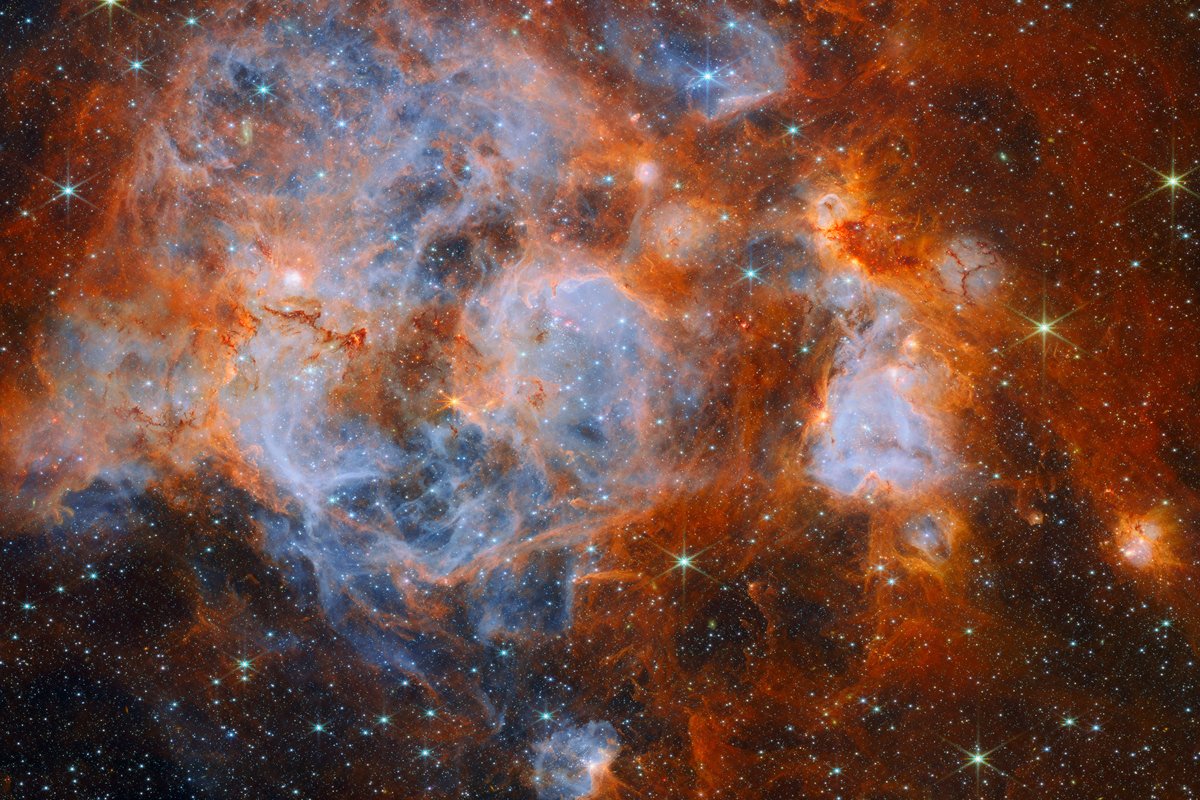
Webb's Picture of the Month shows N159, a star-forming region in the Large Magellanic Cloud 161,000 light-years away, where thousands of stars less than three million years old are forming in clouds of gas and dust — under conditions more like the early Universe than like our own galaxy. This article was published 27 October 2026; the image itself was released as ESA/Webb Picture of the Month on 22 October 2026.
Photo: ESA/Webb, NASA & CSA, E. Sabbi, M. Zamani / Wikimedia Commons (CC BY 4.0)