Key points
- Democrats have secured at least 51 seats in the US Senate, enough for a majority, according to Associated Press projections reported by Al Jazeera — with a handful of races still being counted.
- The majority rests on six Republican-held seats changing hands: North Carolina, South Carolina, Texas, Ohio, Iowa and Kansas, Agence France-Presse and USA Today report.
- Democrats had already been projected to retake the House, so the Senate call gives the party control of both chambers of Congress and ends the Republican trifecta won in 2024.
- The calls are media projections, not certified results: the new senators take their seats in January 2027, and the exact size of the majority is not yet known.
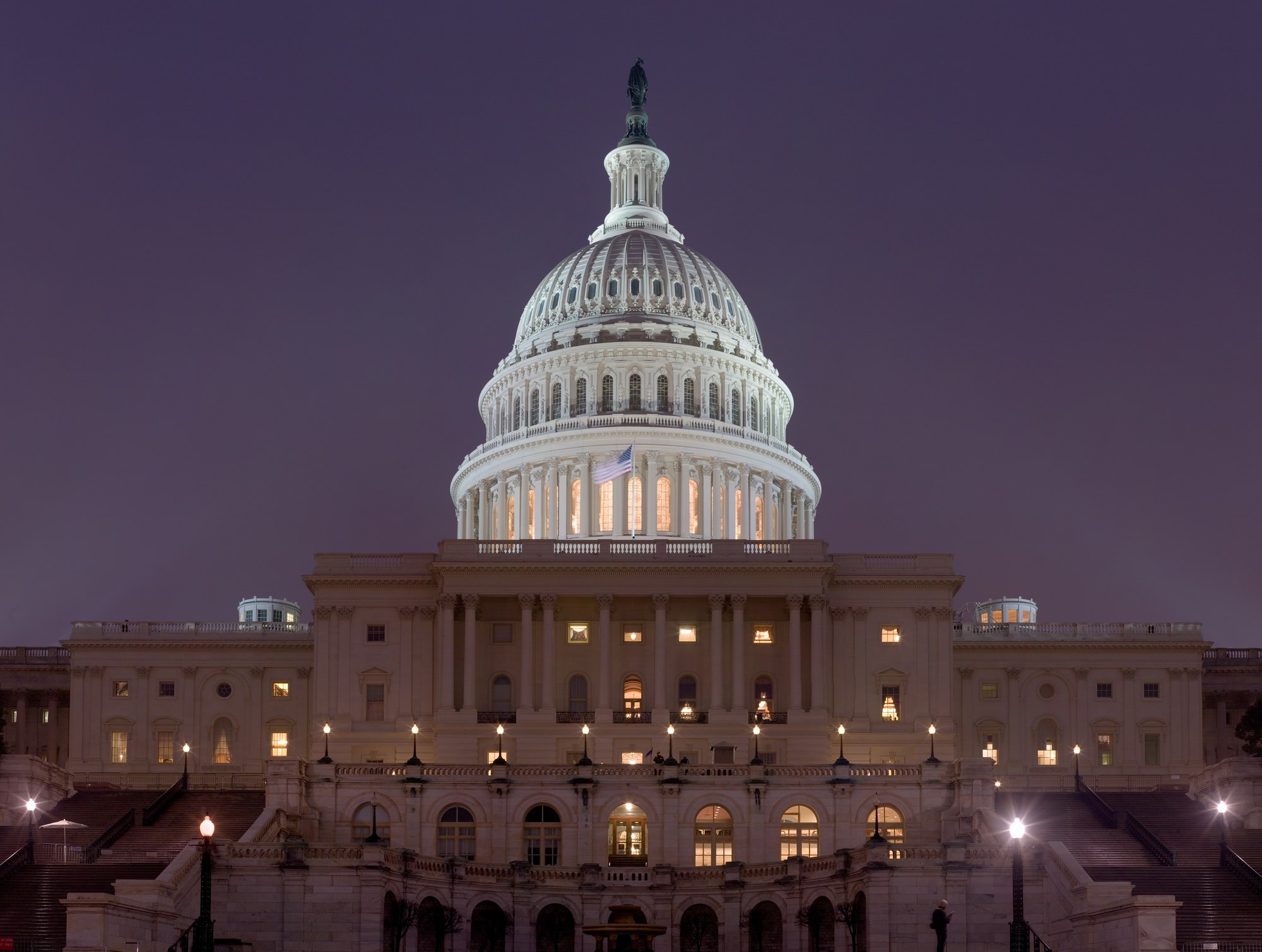
Democrats have taken control of the United States Senate, completing a midterm sweep that hands the party both chambers of Congress. The Democratic Party has regained control of the upper chamber, according to Associated Press projections reported by Al Jazeera, which put the party at at least 51 seats in the 100-seat chamber — enough for a majority, with a handful of races still being counted. Hours earlier, the same party had been projected to retake the House of Representatives, a call this site reported in the morning. Read more: Democrats projected to retake the US House in midterm wave, as Senate control stays undecided
The six seats that changed hands
The Senate had been projected to be harder to flip than the House, Al Jazeera notes, given that only about a third of seats are contested at a time — and this cycle saw 35 Senate races, including two special elections. Democrats needed a net gain of four seats to take the chamber from a Republican majority of 53–47, Al Jazeera reports, and they won six. In North Carolina, former governor Roy Cooper beat Michael Whatley, and in South Carolina, paediatrician Annie Andrews beat Darline Graham — the first Democratic Senate win in South Carolina since 1998, Al Jazeera reports. In Texas, state legislator James Talarico beat Attorney General Ken Paxton, in a state where a Democrat had not won a statewide election since 1994, Al Jazeera reports. In Ohio, Sherrod Brown beat incumbent Jon Husted, and in Kansas, pastor Adam Hamilton beat incumbent Roger Marshall — the first Democrat elected to the Senate from Kansas since 1932, Al Jazeera and Agence France-Presse report. Agence France-Presse counts Kansas and Iowa as the fifth and sixth Republican-held seats to fall, with Josh Turek beating Ashley Hinson in Iowa, USA Today reports.
Democrats also defended the seats they could not afford to lose. Jon Ossoff won re-election in Georgia, Al Jazeera reports, and Chris Pappas won the open seat in New Hampshire, USA Today reports — a win that makes Pappas the first openly gay man elected to the Senate. In Minnesota, Peggy Flanagan is set to become the first Native American woman elected to the Senate, USA Today reports.

What control of both chambers means
The result ends the Republican trifecta achieved in the 2024 election, Al Jazeera reports, when the party won the Senate, the House and the presidency together. Agence France-Presse reports that control of both chambers gives Democrats the power to block President Donald Trump's agenda and to investigate alleged corruption during the last two years of his presidency. In a victory speech after the Senate was called, Democratic leader Chuck Schumer said the party had beaten the odds by listening to voters on the issues that mattered most to them, USA Today reports. President Trump responded on social media that Republicans would have won had he been on the ballot, USA Today reports, while Al Jazeera's live blog reports that he also said in part that Iran was a reason for the heavy Republican losses.
The key figures
| Measure | Figure | Source |
|---|---|---|
| Senate balance before the election | 53–47, Republican | Al Jazeera |
| Net Senate gains Democrats needed | Four | Al Jazeera |
| Senate seats projected for Democrats | At least 51 | Associated Press, via Al Jazeera |
| Republican-held seats flipped | Six: North Carolina, South Carolina, Texas, Ohio, Iowa, Kansas | Al Jazeera; Agence France-Presse; USA Today |
| Senate races contested | 35 | Al Jazeera |
| New senators take their seats | January 2027 | People |
What happens next
What happens next is, first, counting. Votes are still being counted across the country, Al Jazeera's live blog reports, and the Associated Press tally carried by APA puts Democrats at 51 seats and Republicans at 39, with the remaining races still to be called. Only after state counts are certified will the exact size of the Democratic majority be known for certain. As People notes, the party must now elect a majority leader to succeed John Thune, and the new senators' terms will run through January 2033.


For the president, the election was the first nationwide verdict on the first two years of his second term. A Democratic Congress does not end his presidency — he can still veto legislation, as this site's House coverage noted — but it ends the period in which his party controlled both chambers, and it opens two years in which every spending bill, every investigation and every confirmation fight will be negotiated across a divide.
Updates & corrections
Published 4 November 2026.
Senate control is a media projection (Associated Press) at the time of publication, not a certified result; counting continues and the exact size of the majority is not yet known. The House projection is covered separately. No corrections have been made.
Sources
- Al Jazeera, Democratic Party flips US Senate in 2026 midterm elections, 4 November 2026, on Associated Press projections giving Democrats at least 51 seats, the six flipped seats, the 53–47 balance before the election, the four net gains needed, the end of the Republican trifecta, the 35 Senate races contested, and the seats held in Georgia and Virginia: aljazeera.com
- Al Jazeera, US midterm election results live: Democrats win Senate majority, 4 November 2026, on Democrats officially securing 51 seats, the Iowa and Kansas flips, the Texas governor result, counting continuing across the country, and President Trump's remarks on Iran and on vetoes: aljazeera.com
- Agence France-Presse via IOL, Democrats seize control of US Congress in crushing blow to Trump, 4 November 2026, on Democrats winning full control of Congress, Kansas and Iowa as the fifth and sixth Republican-held seats to fall, the Kansas result as the first Democratic Senate win there since 1932, the Texas governor result, and the seats held in Georgia and New Hampshire: iol.co.za
- USA Today, Democrats win control of Congress in sweeping rebuke of Trump: Live results, 4 November 2026, on the flips in Texas, Iowa, Ohio, South Carolina and Kansas, the South Carolina and Texas results, the New Hampshire and Minnesota firsts, Chuck Schumer's victory speech, and President Trump's social media response: usatoday.com
- People, Democrats Flip Senate with Historic Wins in Texas, South Carolina, Kansas and More, 4 November 2026, on the Associated Press projection of at least 51 seats, the election of a new majority leader to succeed John Thune, and the new senators' terms beginning in January 2027: people.com
- APA, Democrats take lead over Republicans in US Senate with 51 seats, 4 November 2026, on the Associated Press tally putting Democrats at 51 seats and Republicans at 39 with counting continuing: en.apa.az