Key points
- Interior Ministry: 410,000 nationwide, including 110,000 in Paris. Unions (CGT): about 800,000 nationwide, including about 250,000 in Paris.
- 1,314 people arrested; 53 members of the security forces injured; about 70,000 police and gendarmes deployed.
- The movement began with school protests on 17 September 2026 at Lycée Saint-Exupéry in Créteil; GlobalNet reports more than 600 schools and universities joined.
- Next: fresh protests on Saturday 31 October and a nationwide strike on 5 November.
- Presidential election due April–May 2027; President Macron cannot seek a third consecutive term.
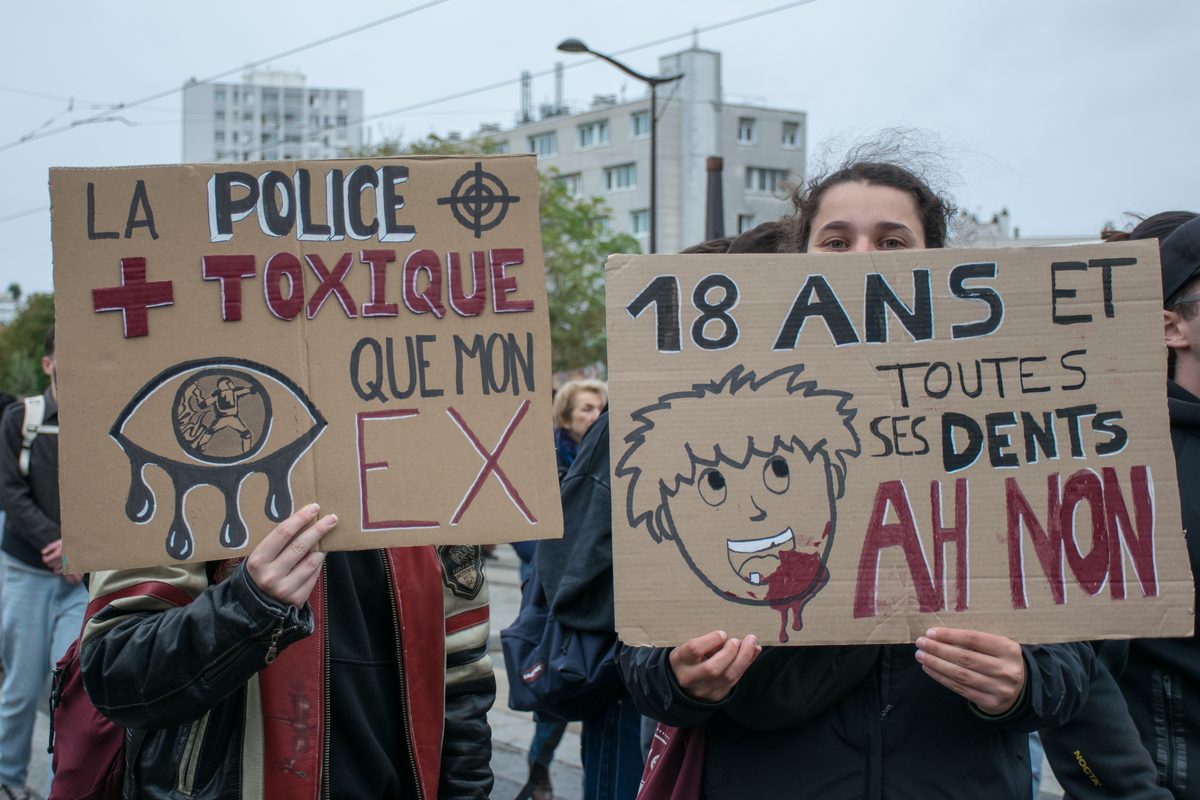
Mass protests swept France on Saturday 24 October 2026, as students, unions and cost-of-living demonstrators marched in cities across the country. The Interior Ministry said 410,000 people took part nationwide, including 110,000 in Paris. Unions, led by the CGT, said about 800,000 took part nationwide, including about 250,000 in Paris. Both figures are reported here, as the two sides disagree.
About 70,000 police and gendarmes were deployed. The ministry said on Sunday that 1,314 people had been arrested and 53 members of the security forces were injured. Read more: Students defeat Vucic in Serbia — how a protest movement took parliament
The numbers, attributed
| Measure | Figure | Source |
|---|---|---|
| Turnout, nationwide | 410,000 | Interior Ministry |
| Turnout, nationwide | About 800,000 | Unions (CGT) |
| Turnout, Paris | 110,000 | Interior Ministry |
| Turnout, Paris | About 250,000 | Unions (CGT) |
| Police and gendarmes deployed | 70,000 | Authorities |
| Arrests (final, Sunday) | 1,314 | Interior Ministry |
| Security personnel injured | 53 | Interior Ministry |
Where protests took place
Clashes were reported in Paris, including at Porte de Vincennes, and in Marseille. Protests also took place in Lyon, Toulouse, Bordeaux, Nice and other cities across France.
How the protests began
The movement began with school protests. On 17 September 2026, a school blockade took place at the Lycée Saint-Exupéry in Créteil, over conditions including leaking roofs, overcrowding and a lack of air-conditioning. GlobalNet reports that more than 600 schools and universities joined the movement, and that more than 4,000 teaching posts were cut in 2026. The protests widened to living costs and public services.
An earlier day of protests on 17 October drew about 550,000 people according to the Interior Ministry.
The political stakes
France's presidential election is due in April–May 2027, with the first round on 18 April and the second round on 2 May, according to Reuters. President Macron cannot seek a third consecutive term. Jordan Bardella was re-elected as party leader with about 99 percent of the vote. An October 2026 Odoxa poll reported by Reuters put Marine Le Pen first in first-round voting intentions, at 37 or 38 percent depending on the scenario tested.
What happens next
Unions have called fresh protests for Saturday 31 October and a nationwide strike for 5 November. Europe Unfolded will follow both.
Watch our coverage
Watch: Students Reject the Government's Deal in France on YouTube
Updates & corrections
Published 27 October 2026.
Corrections made 27 October 2026: the school and teaching-post figures are now attributed to GlobalNet as a single source; two table sources were made precise; Macron's term limit is worded precisely; two source dates were corrected. The byline was also changed to credit the newsroom, because Lena Fischer's permanent column topic is now Mobiles & Gadgets and Protests is a news section, not a column.
Sources
- Reuters, via The Indian Express (25–26 October 2026), on turnout, Paris clashes and Marseille: indianexpress.com
- Reuters, via CGTN (25 October 2026), on the Paris dispersal and the 70,000-strong deployment: news.cgtn.com
- Al Jazeera photo gallery (25 October 2026), on the ministry and union turnout figures: aljazeera.com
- France 24, via ABP Live (25 October 2026), on arrests and city-by-city turnout: news.abplive.com
- TRT World (25 October 2026), on the final arrest figure of 1,314, 53 injured, the 31 October protest call and the 5 November strike call: trtworld.com
- The Hindu (25 October 2026), on further rally calls and Macron's mandate expiring next April: thehindu.com
- Al Jazeera explainer (18 October 2026), on how the school protests became a wider political crisis: aljazeera.com
- GlobalNet News (26 October 2026), on the 17 September Créteil blockade, the 600-plus schools that joined, and the teaching posts cut in 2026: globalnet.news
- UkrNews (26 October 2026), on the 17 October turnout of about 550,000 according to the Interior Ministry: ukranews.com
- The Vibes (25 October 2026), on the election being six months away, Macron being unable to seek a third term, and Bardella's re-election with about 99 percent: thevibes.com
- Reuters (14 October 2026), on the Odoxa poll putting Le Pen first at 37 or 38 percent, and on the 18 April first round and 2 May second round: reuters.com