Key points
- 31 healthy adults aged 60 to 75 ate 60 grams of unsalted, skin-roasted peanuts daily for 16 weeks in a randomised, controlled crossover trial (NUTRIM, Maastricht).
- Brain insulin responsiveness was beneficially affected in memory regions including the hippocampus and parahippocampal gyrus.
- Small study, and the finding is a lead, not proof: responsiveness “may contribute” to cognitive benefits, researcher Joris said.
- Same week, second finding: omega-3 prescriptions linked to around half the glaucoma risk in 14,168 dry-eye patients over five years.
A modest food, a surprising brain finding
Start with the headline, because it is genuinely interesting. A study from the Institute of Nutrition and Translational Research in Metabolism, known as NUTRIM, at Maastricht University Medical Center in the Netherlands, has found that longer-term consumption of unsalted, skin-roasted peanuts can beneficially affect insulin responsiveness in the brains of older adults, according to a report shared on 27 October 2026 by The Peanut Institute and carried by PR Newswire via Morningstar. The findings were recently published online in the international, peer-reviewed journal Food & Function, the same report said.
Why should anyone care about insulin in the brain? Most people associate insulin with blood sugar and diabetes, and that association is correct — but incomplete. The report explained that insulin acts as a vital signalling molecule in the brain that supports the growth and survival of nerve cells and communication between them, all of which are important for memory and may help protect against Alzheimer's disease. As people age, the brain may become less responsive to insulin, and that change has been linked to age-related cognitive decline, Dr Peter Joris, the study's senior author and an associate professor in the Department of Nutrition and Movement Sciences at NUTRIM, Maastricht University Medical Center, said in the report.
After a 16-week course of peanut consumption, the study documented that brain insulin responsiveness was beneficially affected in a cluster in the right hemisphere, encompassing parts of the lingual gyrus, hippocampus and parahippocampal and posterior cingulate gyri, the report said. Those are brain regions involved in memory. That sentence deserves a pause: this was not a test of whether participants remembered more words on the day. It was a measurement, using brain imaging, of how those memory regions responded to insulin. That distinction will matter when we reach the "so what" — and it is the reason this article does not call peanuts a memory cure. Read more: Inside the cosmic cauldron: Webb finds thousands of young stars brewing 161,000 light-years away
How the study was actually done
| Item | Figure |
|---|---|
| Participants | 31 healthy adults, aged 60–75 |
| Daily amount | 60 grams of unsalted, skin-roasted peanuts |
| Duration | 16 weeks |
| Design | Randomised, controlled crossover trial |
| Second finding | 14,168 dry-eye patients; omega-3 prescription linked to around half the glaucoma risk over five years |
Good health reporting starts with the methods, because methods are what separate a promising clue from a proven treatment. Here, the design is stronger than many food studies, and smaller than readers might assume.
The NUTRIM study involved 31 healthy older adults who ranged in age from 60 to 75 and consumed 60 grams — approximately two servings — of peanuts daily for 16 weeks, the report said. It was a randomised, controlled crossover trial, which the report described as a strong clinical research design. In a crossover trial, participants experience both conditions — in this case, a peanut period and a control period without peanuts — and after 16 weeks, participants switched to the other study period, the report said. That matters because each person, in effect, acts as their own comparison, which helps rule out the possibility that the peanut group simply happened to be healthier to begin with.
Participants were given premeasured packets of skin-roasted peanuts during the peanut intervention period and directed to consume the peanuts in the morning or afternoon, the report said. They were allowed to eat the daily amount all at once, spread it out over the day or add the peanuts to their meals. During the control period, participants did not consume peanuts. Brain insulin responsiveness was assessed from changes in regional cerebral blood flow after intranasal insulin administration, using arterial spin labelling magnetic resonance imaging, the report said — in plain terms, a specialised MRI technique that tracks blood flow in the brain after insulin is given through the nose. Cognitive performance was evaluated using the Cambridge Neuropsychological Test Automated Battery, known as CANTAB, the report added.
Why peanuts, of all foods?
If you are wondering why researchers picked peanuts, rather than, say, blueberries or walnuts, the report offers a plausible, multi-ingredient answer, rather than a single magic compound. Multiple nutrients present in peanuts, including unsaturated fats, dietary fibre, vitamins and minerals, and bioactive phytochemicals, could potentially contribute to the observed brain benefits, Joris said in the report. Peanuts are also a good source of plant-based protein, and are especially rich in L-arginine. L-arginine is a key precursor of nitric oxide, which has been reported to facilitate learning and memory performance.
That framing is honest in an important way. It says could potentially contribute, not does cause. Foods are packages, not pills. A handful of peanuts delivers fat, fibre, protein, micronutrients and plant compounds together, and any brain effect, if confirmed in larger trials, could come from that combination, from overall diet quality, or from something else entirely that a small trial cannot fully separate out.
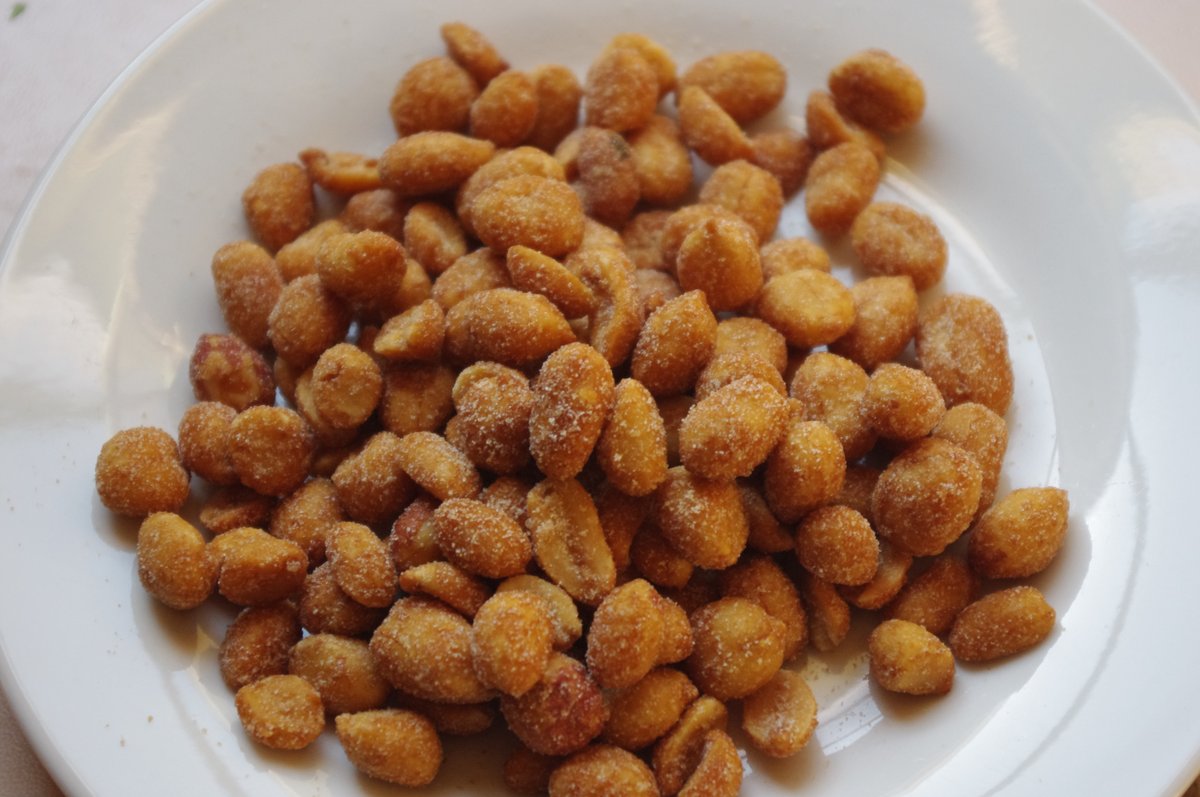
There is also a detail readers should not miss. The peanuts in this study were unsalted and skin-roasted. That is not the same as salted bar peanuts, honey-roasted peanuts coated in sugar, or peanut butter loaded with added sugar and salt. If you take one practical lesson from this study, it is to match the food studied, not just the word peanuts on a packet, and to remember that 60 grams a day is a substantial daily amount, roughly two servings, with real calories attached. A food can be nutrient rich, and still unhelpful, if it quietly pushes total energy intake far beyond what you need.
What this study does not prove — and why that matters
Now the necessary caution, stated plainly rather than buried. First, size: 31 healthy older adults is a small study. Small studies can detect real signals, but their results are also more vulnerable to chance and harder to generalise. Second, population: participants were healthy adults aged 60 to 75. The findings do not automatically apply to younger adults, to people with diabetes, dementia or other conditions, or to people already eating very different diets. Third, outcome: the headline measure was brain insulin responsiveness on imaging, not a diagnosis prevented, a disease delayed, or a memory score improved in this particular paper. The earlier verbal-memory finding came from a previous publication from the same intervention, not from the new insulin-responsiveness result itself: in 2025, Joris found the 16-week peanut intervention increased global cerebral blood flow by 3.6% and verbal memory by 5.8%, published in Clinical Nutrition, the report said.
Fourth, funding and independence: the NUTRIM study was supported by funding from The Peanut Institute Foundation, the report said, adding that the funder did not have a role in the study design, implementation, analysis or interpretation of the data or the writing of the manuscript. That disclosure is reassuring, and it is also exactly why independent replication matters. A finding funded by an industry foundation, however cleanly conducted, should be confirmed by other teams, in larger groups, before it shapes public advice.
Finally, a safety point that no nutrition article should omit: peanuts are a common and potentially severe allergen. Anyone with a peanut allergy should not attempt to copy this intervention, and anyone with diabetes, kidney disease, a weight-management plan or a condition affected by dietary fat, protein or potassium should talk to their own clinician or dietitian before adding 60 grams of peanuts a day. A study result is not a personal prescription.
A second food finding in the same week
This peanut study lands in a week when health readers are also hearing about another food-and-vision finding. New research published in Translational Vision Science & Technology, reported on 27 October 2026 by the Association of Optometrists, explored omega-3 supplementation and glaucoma risk among patients with dry eye disease. Researchers examined data relating to 14,168 individuals with dry eye disease, the report said, and found that individuals who had received an omega-3 prescription were around half as likely to develop glaucoma, and 43% less likely to develop ocular hypertension, over a five-year follow-up period.
Why mention a second study? Because together they illustrate the pattern of nutrition research in 2026. Specific foods and specific compounds, studied in specific groups, producing specific, modest, mechanism-flavoured results, not sweeping claims that one food fixes everything. The best response to that curiosity is not a longer list of miracle foods. It is slower, better questions. Who was studied, how many, for how long, what was measured, and has anyone else found the same thing?
What to do with this — a practical, honest takeaway
If you enjoy peanuts, are not allergic, and your overall diet and health allow them, this study gives you one more reason to feel good about an unsalted, skin-roasted handful as part of a varied diet — alongside vegetables, whole grains, fish, legumes and other minimally processed foods, rather than instead of them. It does not give you a reason to eat peanuts by the bagful, to replace prescribed treatment, or to expect a measurable memory boost in 16 weeks. The researchers themselves framed the conclusion carefully: enhanced regional brain insulin responsiveness "may contribute" to the cognitive benefits of unsalted, skin-roasted peanut intake, Joris said in the report. "May contribute" is science doing its job — offering a lead, not a promise.
The most exciting sentence in this story may therefore be the least dramatic one: a small, well-designed trial found a measurable brain signal, pointed to a plausible mechanism, and left the door open for bigger trials to confirm or refute it. That is how nutrition science actually moves — one careful, replicable step at a time. Watch for the replication. Until then, enjoy your peanuts if you like them, keep the portion honest, choose unsalted over sugar- and salt-coated versions, and let the next, larger study do the talking.
Updates & corrections
Published 27 October 2026.
No updates or corrections have been made to this article since publication.
Sources and notes
- Morningstar / PR Newswire (27 October 2026), The Peanut Institute report on the NUTRIM Maastricht study: participants, design, brain regions, the 2025 precursor finding, nutrients, funding disclosure and the "may contribute" conclusion: morningstar.com
- Association of Optometrists (27 October 2026), on the omega-3 supplementation and glaucoma-risk study in Translational Vision Science & Technology: aop.org.uk